
Trading Psychology: The Secret Skill Every Beginner Needs
Introduction
Many beginners believe that successful trading is all about finding the perfect strategy. In reality, one of the most important factors in trading success is psychology.
Trading psychology refers to the emotions and mindset that influence your trading decisions. Even the best trading strategy can fail if emotions take control.
Why Trading Psychology Matters
The financial markets move up and down every day. When prices rise, traders may feel excited and become overconfident. When prices fall, fear and panic can lead to poor decisions.
Successful traders understand that controlling emotions is just as important as understanding charts and market analysis.
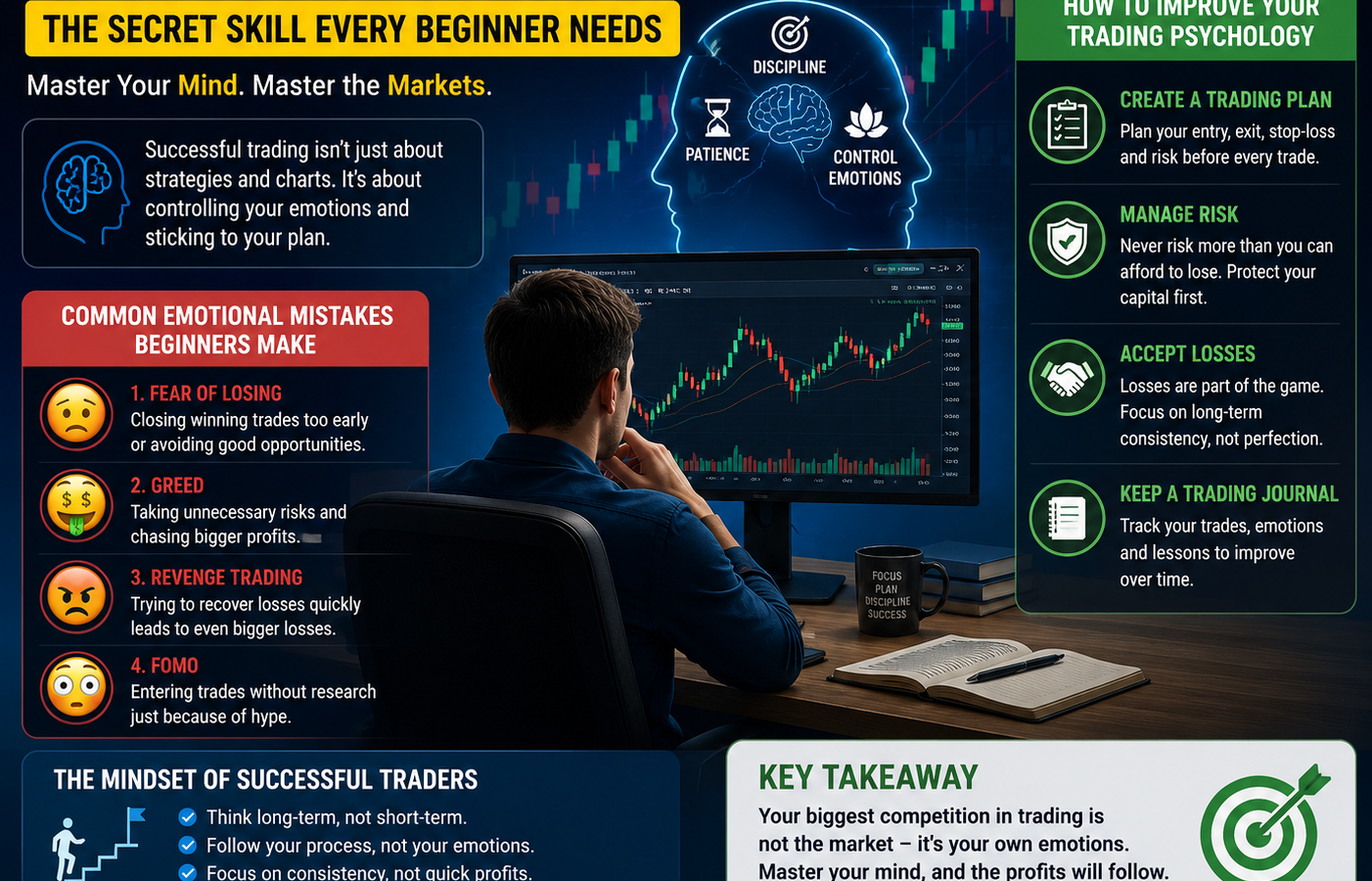
Common Emotional Mistakes Beginners Make
1. Fear of Losing
Many beginners close winning trades too early because they are afraid profits will disappear. Others avoid taking good trading opportunities because they fear losing money.
2. Greed
Greed can cause traders to take unnecessary risks. Instead of following a trading plan, they may continue chasing bigger profits and end up losing money.
3. Revenge Trading
After a loss, some traders immediately open new trades to recover their money. This often leads to even bigger losses because decisions are based on emotions rather than analysis.
4. Fear of Missing Out (FOMO)
When traders see a market moving quickly, they may enter trades without proper research because they fear missing a profitable opportunity.
How to Improve Your Trading Psychology
Create a Trading Plan
Before entering a trade, decide:
- Entry point
- Take-profit target
- Stop-loss level
- Risk amount
Following a plan helps reduce emotional decisions.
Manage Risk
Never risk more money than you can afford to lose. Many professional traders focus on protecting their capital before trying to make profits.
Accept Losses
Losses are a normal part of trading. No trader wins every trade. The goal is not to be right all the time but to manage risk effectively.
Keep a Trading Journal
Write down:
- Why you entered a trade
- How you felt during the trade
- What you learned
A journal helps identify emotional mistakes and improve decision-making over time.
The Mindset of Successful Traders
Successful traders think long-term. They understand that consistent profits come from discipline, patience, and risk management—not from trying to get rich quickly.
They focus on following their process rather than worrying about the outcome of a single trade.
Conclusion
Trading psychology is one of the most important skills a trader can develop. By controlling emotions, following a trading plan, and managing risk carefully, beginners can build the habits needed for long-term success.
Remember: In trading, your biggest competition is often not the market—it is your own emotions.