
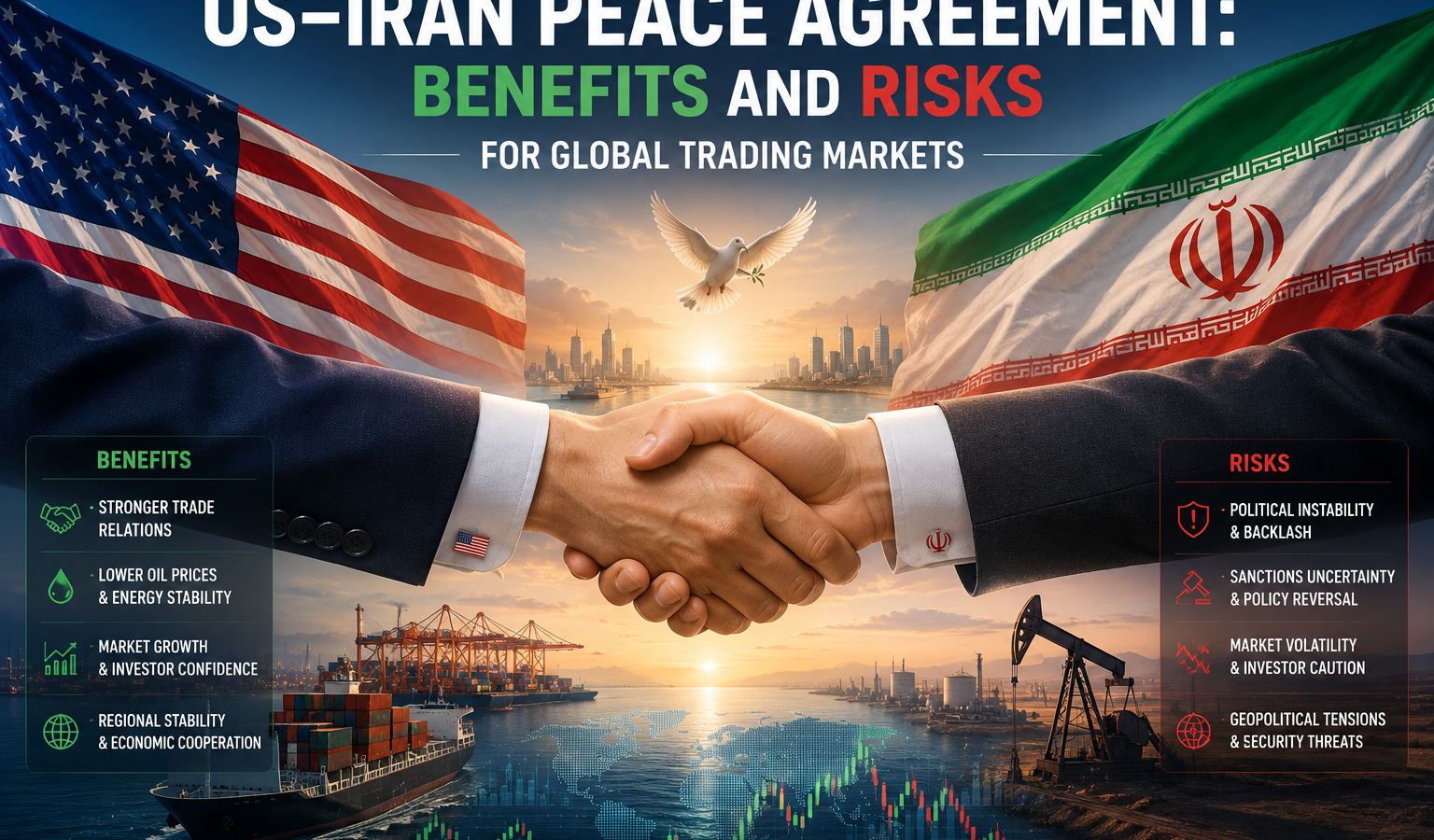
US–Iran Peace Agreement: Benefits and Risks for Global Trading Markets
Published: June 2026
Recent reports indicate that the United States and Iran have reached a preliminary peace agreement aimed at ending months of conflict, reopening critical shipping routes, and reducing tensions across the Middle East. The agreement includes commitments to restore maritime traffic through the Strait of Hormuz and ease certain economic restrictions, although several key issues remain under negotiation. (Reuters)
For investors, traders, and businesses worldwide, the development could have significant implications for financial markets, commodities, currencies, and global trade.
Immediate Benefits for Financial Markets
1. Lower Oil Prices
One of the first market reactions has been a decline in crude oil prices. Traders expect additional Iranian oil supplies to return to global markets and shipping disruptions in the Strait of Hormuz to ease. Oil prices fell shortly after news of the agreement emerged. (Reuters)
Impact:
- Reduced fuel costs for businesses.
- Lower transportation expenses.
- Potential relief from inflation pressures worldwide.
- Positive sentiment for oil-importing countries.
2. Stronger Global Stock Markets
Investors generally welcome geopolitical stability. Following reports of the agreement, major stock markets in the United States and Europe moved higher as risk concerns eased. (The Guardian)
Sectors likely to benefit:
- Airlines
- Logistics companies
- Manufacturing firms
- Consumer goods companies
- Technology stocks
3. Improved Global Trade
The Strait of Hormuz is one of the world’s most important energy shipping routes. Reopening normal traffic could reduce supply-chain risks and improve international trade flows. (The Guardian)
Potential Losses and Market Risks
1. Pressure on Energy Stocks
While lower oil prices help consumers, they may reduce profits for:
- Oil producers
- Energy exporters
- Oil service companies
Companies heavily dependent on high oil prices could experience weaker earnings if crude prices continue to decline. (Reuters)
2. Decline in Safe-Haven Assets
During conflicts, investors often move money into assets such as:
- Gold
- U.S. Dollar
- Government bonds
As tensions decrease, demand for these safe-haven investments may weaken, potentially causing price declines. (OANDA)
3. Agreement Still Faces Challenges
Although the peace agreement is a positive development, many issues remain unresolved, including nuclear negotiations and long-term regional security concerns. Analysts warn that market volatility could return if negotiations break down. (The Guardian)
Impact on Different Asset Classes
| Asset Class | Likely Impact |
|---|---|
| Global Stocks | Positive |
| Oil Prices | Negative to Neutral |
| Gold | Slightly Negative |
| Airlines | Positive |
| Shipping Companies | Positive |
| Emerging Markets | Positive |
| Energy Stocks | Mixed |
| Bonds | Mixed |
Long-Term Outlook
If the agreement evolves into a permanent settlement, the global economy could benefit from:
- Stable energy supplies
- Lower inflation
- Increased international trade
- Improved investor confidence
- Higher business investment
However, investors should remember that geopolitical agreements often require months of implementation and verification. Any setback could quickly reverse recent market gains. (Gramercy – A Better Approach To EM)
Conclusion
The emerging US–Iran peace agreement represents a potentially positive turning point for global financial markets. Lower oil prices, improved trade routes, and reduced geopolitical uncertainty are likely to support economic growth and investor confidence in the near term. However, unresolved political and security issues mean that market participants should remain cautious and monitor developments closely.
For traders and investors, the current environment may present opportunities in equities, transportation, and trade-related sectors, while energy markets and traditional safe-haven assets could face short-term pressure. As always, long-term success depends on balancing optimism with careful risk management. (Reuters)